Health and fitness company Protein World ignited a fire when they released a series of bold golden print ads throughout London on April 15.
The 74 billboards include a male and female version, but only one of the swimsuit models has inspired a backfire that reverberated across the internet like a barbell hitting the floor. Can you guess which one?
With debates from supporters and opponents overflowing on the web, both parties fail to engage in the only discussion worth having: Everyone is wrong.
All reviews aside, advertisers should be jumping for joy at the newest horror flick to hit the box office.
Unfriended, while at surface level may reek of low-budget millennial cliches, is the first silver screen production to attempt an immersivecyber setting. The film takes place in a Skype video chat between five friends and is supplemented by their interactions across different platforms as their video chat is hacked by an anonymous user.
What Unfriended lacked in plot development it made up for with a
goldmine of advertising opportunities. The genuineness of main character
Blaire Lily's digital multitasking allowed for inconspicuous product
placement disguised as background noise. Aside from obvious homages
to Skype, Spotify and iMessage, names like Tumblr, Teen Wolf and Forever
21 made B-list appearances within the tabs of Lily's browser.
A quick search for "false advertising" on Google news uncovers a hotbed of legal controversy surrounding big brands -- more than 50 pages worth for articles published in 2014 alone. Companies like Nestle, Nordstrom and Red Bull have sat under the media spotlight for the misleading claims made in their marketing efforts.
Not only have advertising lawsuits damaged individual brands, but the prevalence of these controversies in mainstream media has left consumers with a sour aftertaste. This negative attitude about the advertising industry perpetuates a multitude of myths. The four most common follow.
Facebook appeared at the
forefront of online privacy paranoia in late 2011 through early 2012 according to
a timeline of articles over at Huffington Post. It must have
been a slow news day for reporters at the publication and others like it -- Mashable, USA Today and Business Insider covered the controversy as well --
because cookie tracking is in no way ripe gossip. Despite the nativeness of
internet cookies, which first developed in 1995, the scrutinizing headlines echoed panic into the online
community. A 2012 survey found 70% of Facebook users don’t trust the $200 billion company with their personal information.
A fear epidemic of near
dystopian proportions has ensued since, targeting various big name brands like
Apple and Google. An article on Australian pop culture site Junkee confirmed just how
parasitic the outrage has become when it discussed the tracking patterns of
Google Maps. Reporter Elizabeth Flux writes, “Knowledge [of tracking] is easy to drown out by shoving in some
headphones… until everything stops being1984.”
Chad Little, CEO of
Fetchback, responded
to criticism of data tracking by emphasizing its key role in marketing and advertising
(which I’ll comment on later). He writes, “Consumers need to understand that it is the voice of a few that make the
negative perception of behavioral tracking a much bigger issue than it really
is.”
If you haven’t yet caught
on, I pursue the unpopular opinion on digi-data tracking and consider it a
blessing rather than a curse. Maybe that’s because my millennial status groomed
me to perceive technology as [beneficial]. Maybe, instead, my studies of mass
communication in college have taught me to approach online issues from a
business standpoint. Or maybe I just feel obligated to root for the underdog.
Metadata tracking established
a new era of life online catered to each individual user. If that in itself
doesn’t induce gratitude, check out the 10 ways data tracking is making your
life better right now:
1. PRODUCT RECOMMENDATIONS
Amazon and many other online retailers promote a spending environment by recommending similar products viewed by other users. Amazon is the number one "e-tailer" in the world, serving 19.5 million customers every day.
2. STREAMING SERVICES
Like online retailers, streaming services like Netflix, Hulu, Pandora and Spotify develop a user profile based on your interests and suggest movies, music and TV you may like. Netflix boasts over 53 million members, validating the popularity of the cord-cutter movement.
3. ANALYTICS FOR SMALL BUSINESSES
Small businesses that operate blogs generate 126% more traffic than their blogless counterparts, according to an infographic from Social Media Today. Web analytics services, free and paid, like Google Analytics, Optimizely and Twitalyzer track site visitors and gauge the effectiveness of different marketing tactics.
4. ACCOUNT SECURITY
Banks and e-mail carriers use activity location to verify the security of your accounts. A few months ago, my Gmail used compiled data of all my login locations to prevent someone on the other side of the world from hacking into my account.
5. ADVERTISMENTS
Most free websites like Facebook do sell users' browsing behavior information to advertisers in order to make money, but this controversial practice keeps our favorite internet havens open to all. In absence of advertisements, webistes would rely on income from donations, premium services or membership fees -- remember Ello?
HAVE NO FEAR -- 1984 IS NOWHERE NEAR
I’ll let you in on a little secret: The world’s most beloved companies all use some sort of metadata collection to change the way we live our online lives, and the methodology is much less “Big Brother” and much more “Big Sister” – that edgy yet compassionate chick who lends you her iPod, teaches you what staple pieces work best with your wardrobe and stays in with you on Friday night to binge watch Orange is the New Black after your date stood you up.
Next time she interjects into your mandatory Pinterest and potato chips hour to tell you dinner is ready, swallow your complaints and thank her for all she does for you. Trust me, it's not easy being a busybody.
In what way has data tracking affected you? Do you find it harrowing or harmless? Comment below!
Purina cat litter brand Tidy Cats released a YouTube video Tuesday to promote their Los Angeles-based campaign "Kitten Therapy." The company sought out stressed passersby on the city's streets, asked about their emotional burdens then encouraged them to step inside a glass box to relax. After a short period of guided meditation, participants encounter the real therapeutic value of the experiment: a swarm of playful kittens that dash in from hatchways in the wall.
Screenshots courtesy of Tidy Cats' "Kitten Therapy" YouTube video.
I stumbled upon the ad while video-surfing YouTube's "Most Popular" section and couldn't resist a peak. Tidy Cats and SoulPancake, the creative agency in charge of the campaign concept, surpassed my expectations both as a cat enthusiast and an advertising geek. I'm not alone; in just four days, the video has accumulated over 1 million views and launched coverage by Huffington Post, Yahoo and People Magazine, to name a few.
Like Google and The Walking Dead, Tidy Cats' advertising campaigns illustrate an expert understanding of marketing in the digital age. Attention paid to a few key strategies separates Kitten Therapy and the Tidy Cats brand from competitors.
1. Tidy Cats Gives for the Sake of Giving
My marketing idol Gary Vaynerchuk would classify the Kitten Therapy video as one giant "jab" -- a non-intrusive commercial message that doesn't ask for or demand consumer action ("buy this litter," "print this coupon," "share this photo") but builds brand equity with the simple act of giving. Tidy Cats executed the Kitten Therapy campaign to bless strangers with a few minutes of uninterrupted fur fun. Of course, the video's virality constitutes priceless PR, but the glass box experiment yields a pretty low net benefit in and of itself. Even the brand's YouTube account prides itself on creating content for consumer enjoyment. Straight from its "About" section, Tidy Cats says, "Tidy knows you can't get enough cat-related entertainment. So here's an entire YouTube channel dedicated to the awesome times that come along with cat ownership. Just another way that Tidy has your back (and your cat's back too)."
2. Tidy Cats Engages in Storytelling
Screenshots courtesy of Tidy Cats' "Virtual Kitten Therapy" YouTube video.
Consumers are quick to recognize -- and ignore -- the pleas of traditional advertisements. The Kitten Therapy video evaded this problem by pursuing a documentary-style approach with advanced video quality, raw interviews and story chronology. Just like the authors of history's most popular novels, the litter company presented a problem (stressed out consumers), approached a climax (the final moments of the guided meditation) and presented a solution (kittens, kittens and more kittens).
Not only did the brand excel in building a story within the video, but it extended the story by releasing their Virtual Kitten Therapy video the same day (it reminds me of Dawn's virtual volunteer ad released back in June, which racked up 3 million views and also won my heart).
3. Tidy Cats Implements Digital Trends
The brand realizes the route to its consumers' hearts is through the screen -- computer, tablet, smartphone or TV -- and it maintains these digital relationships through its YouTube, Facebook and Twitter accounts. The use of hashtags like #kittenweek, #catswin and #helpmejvp propel the brand forward in the digital age of marketing by making content more timely, relatable and shareable. The brand's ability to embrace silliness and genuinity builds the impression of consumer-focused business.
Tidy Cats played off of Discovery Channel's annual summer marathon Shark Week with this ad for their YouTube campaign.
Tidy Cats launched a YouTube campaigned characterized by the hashtag "#helpmejvp," in which Dr. Julius Von Pepperbottom aids people "avoid life's little messes" like slow wi-fi and co-workers' smelly lunches.
Is Tidy Cats' marketing team ahead of the game?
Leave a comment below or reach out to The LC Studio on Twitter.
I would rip out my heart for the marketing crew over at AMC.
The channel's hit drama The Walking Dead returns tonight at 9/8c for the premiere of its fifth season. I'm super excited to write this post not only because I've been a zealous zombie fan since the show's grand debut on Halloween of 2010, but also because I'm an advertising geek; my heart flutters whenever I witness brands using social media to promote their content in the right way.
The Walking Dead is edgy, cryptic and well-written, of course, which is why its viewership has increased nearly threefold since its first season and why it's rated the #1 show among viewers between ages 18 and 49..As entrepreneur and branding expert Gary Vaynerchuk insists, however, great content is only half of the equation that renders success. The other half is great marketing (most importantly the digital kind).
The Walking Dead Instagram chronicled the countdown for season five with photos of this sinister setup in Times Square. Photo courtesy The Walking Dead Instagram.
The Walking Dead boasts an outstanding track record in this department. The show has gained traction over the past four seasons by employing media tactics all brands are told to use but that most never execute effectively. Its skill in personifying itself in the online world and using social networks to connect with fans might be why the show's last midseason premiere in February attracted a horde of 15.8 million viewers -- more than the same night's collection of viewers for the Sochi Winter Olympics.
1: GOOD MARKETING INFECTS THE MASSES (MASS MEDIA, THAT IS)
Photo courtesy The Walking Dead twitter.
The Walking Dead knows how to infiltrate social networks better than flesh-eating zombies know how to infiltrate a slaughterhouse. The show holds ground on Facebook, Instagram and Twitter on which it excels in using native advertising -- content that molds to fit the personality of the individual platform, making it feel more authentic and less like a traditional ad.
Photos courtesy of The Walking Dead Instagram.
Witty one-liners, poignant photos and exclusive videos that follow social media trends spark an engagement with The Walking Dead audience that feels genuine. Posts that present the brand as a member of the audience's digital clique, like the tweet and photoset above, set the stage for the brand to explode in popularity among the millennials it markets to.
This four-minute sneak peek of the season five premiere was posted on The Walking Dead Facebook.
2: GOOD MARKETING MAKES THE FANS BITE BACK
All that native advertising hasn't gone to waste, either. Fans dish out dozens of hashtags associated with the series, pre-, mid- and post-airing, among them not only the expected (#thewalkingdead, #zombies, and #amc) but also the bizarre (#pudding and #crazycheese). The season four finale dominated the twittersphere as the #1 non-sports trending topic with over a million total tweets. The season four premiere also topped the charts as the most watched hour of cable television. Ever.
"Dead Yourself" cat. What could be better?
Photo courtesy The Walking Dead Instagram.
The introduction of the apocalyptic addiction's aftershow, Talking Dead, during its second season created a gateway to interact with fans in a new way. Hosted by funny guy Chris Hardwick, the live one-hour special features fan polls, episode trivia, cast interviews and celebrity guests. Talking Dead is fueled by digital engagement such as hashtags, fan questions posed on social networks and fan photos submitted using the "Dead Yourself" app -- a photo editing program that transforms typical selfies into ghastly versions of the undead. The aftershow ranked in over 7 million views during its last episode following the season four finale.
3. GOOD MARKETING TRANSCENDS ITS MAIN MEDIUM
Photo courtesy "The Walking Dead" Instagram
The zombie series reeks of the undead and the unparalleled. The nail-biting, edge-of-your-seat drama echoes from the TV screen down to the bone. But the story doesn't stop there.
"The Walking Dead" uses social media to extend its plot line, much like its signature monsters, into immortality. The show's strategy in blurring the line between entertainment and reality gives it an unforgettable appeal. It wants fans to live, breathe and think "zombie apocalypse" even during the normal everyday moments of their lives.
The photo to the left, a map of the show's utopian safety zone known as Terminus, exemplifies this tactic by framing the show's plotline as an ominous and inescapable reality.
ALIVE FOR SEASON FIVE
I have the highest hopes for what's to come in the new season, and I have no doubt the show's crew will bring their A game on and off the screen. The Walking Dead has already signed on for a sixth season, which means there's much more marketing greatness staggering our way.
Do you watch The Walking Dead? What do you predict for season five? Share your story below!
Social media platforms haven't grossed over a billion global users by chance. The leverage of these networks lies in their reliance on full self-disclosure, an activity that a recent study suggests may mimic the same kind of pleasure we get from eating, making money and having sex. Social media is addictive.
Advertisers all over are tooting their party horns and tossing confetti at the fact that 2014 has been branded the "year of social media advertising." Platforms like Facebook, Twitter, Instagram and Pinterest are taking full advantage of their addicted audiences by monetizing from implemented advertisements. These partnerships, especially those made with Facebook, the world's leading social media platform, have been met with oodles of user scrutiny.
As a millennial and up-and-coming advertising grad, I recognize social media for both its Dr. Jekyll and Mr. Hyde attributes. I must admit, though, I teeter more toward viewing it as n invaluable marketing tool rather than a pop-up whirlpool privy to the abolition of personal privacy. Maybe I'm an optimist. Or maybe I know, though most people don't, that advertisers aren't out to eat souls. They just want to make money.
The Average Janes and Joes disagree, and now they're fighting back. A new social platform called Ello prides itself on being the "anti-Facebook," mainly in the manner that it will devoid of advertisements. It also boasts exclusivity, a concept Mark Zuckerberg employed when he first created Facebook as an online hub for Harvard students.
Screenshot of Ello feed. Photo courtesy Sharon Profis/CNET
Maybe the allure of exclusivity and promise of ad-free interaction are the inspiration behind the more than 35,000 membership requests Ello has received every hour since its debut in mid-August. Is the dawn of ad-free social media rising?
Mashable opinion columnist Lance Ulanoff says amateur design and poor usability makes the startup "no Facebook killer." It's also worth noting that Ello's lure of unadulterated content holds up poorly next to social networks that are already ad-free, like Google+. So then, what's to blame for all the hype? Is there a stronger undercurrent brewing over at Ello that's responsible for the wash up of eager users on its shore? Persuasion in advertising steals from three categories: pathos (emotional appeal), logos (message content) and ethos (credibility of the source). The message motivating the creation of Ello is clear: an ad-free experience molded by approved membership. The platform's credibility is too weak to generate substantial usership, as Ulanoff points out. What Ello really has going for it is its play on pathos. Upon entering the site's "About" page, users are greeted with an eery explanation of the network's anti-ad origins:
"Your social network is owned by advertisers. Every post you share, every friend you make and every link you follow is tracked, recorded and converted into data. Advertisers buy your data so they can show you more ads. You are the product that’s bought and sold."
This message makes up what Ello is calling its "manifesto." Photo courtesy Vox.com.
It seems Ello may be exploiting the widespread paranoia of privacy invasion on the web. "It's a pretty dark and dystopian view of the social nets," Ulanoff says. Ello's choice of copy is based on the successful tactics of decades of advertising. As Don Draper once said in an episode of Mad Men, "Advertising is based on one thing: happiness. And do you know what happiness is? It's freedom from fear." What's probably driving users like mad dogs to the Ello website isn't its savvy set-up or innovative features but its appeal to a human need for salvation from evil. In this case, the evil-doers wear white-collars along with their crimson horns and prey on the meaty flesh of browser analytics (Daunting!).
Only time will tell if Ello's scare tactics will be enough to keep users hooked or if marketing enlightenment will empower them to turn back to the ad-ridden networks they love.
Do you think an age of ad-free social networking is upon us? Will Ello crash and burn before ever taking off? Share your story below!
In the spring, Durex released an ad for "Earth Hour," a campaign to conserve electricity and "take to the bedroom instead," which received a moderate amount of scrutiny for its use of only opposite-sex couples. Durex claimed the exclusion of same-sex couples was unintentional, and soon after launched the "Love Same Sex" campaign to assure consumers of its acceptance of all kinds of relationships.
This week the company took the marketing tactic a step further with a new Facebook ad for its "Massage & Play" gel featuring a lesbian couple in an intimate embrace and the tagline "it all starts with touch."
This is definitely a bold move for Durex, especially in light of recent news that national support for same-sex marriage may be dropping. It could be that Durex is hoping this new promo ad reverses that trend by way of exposure, a founding concept of advertising based in social psychology. Maybe, though, the brand just trying to compete with its number one nemesis, Trojan, which undoubtedly holds a tight grip on its target market through its partnership with MTV.
Whatever the reasoning, this ad is sure to cause a stir among Durex users and nonusers alike. I respect the risk-taking from a marketing standpoint and am eager to see if similar brands will follow suit.
What do you think about Durex developing on this campaign? Share your story below!
In an age defined by digital media, I think we forget the
importance of face-to-face interaction. A retweet from a company you admire isn’t
the same as a pat on the back. A “like” on your birthday picture from your
favorite aunt on Facebook can’t replace her presence as you cut the cake.
Spending half the night uploading photos of your date night dinner on Instagram
just isn’t the same as basking in the candlelight and staring deeply into the
eyes of… that slice of red velvet cake.
Human beings are social creatures, and while the
introduction of social media has allowed us to embrace it, it will never
replace the interactions we have IRL (that’s “In Real Life”). In fact, studies
on social psychology purport numerous benefits from face-to-face
interaction. IRL contact also has the advantage of allowing nonverbal
communication, which is based off of things like facial expression, posture and
tone of voice and surprisingly makes up more than 50% of all communication. It’s
simply an undeniable fact that face-to-face contact makes us the species that
we are.
The Chromebook Lending Library lends out Chromebooks for free to students at Texas State University
In the realm of marketing, it’s important to cover the IRL
grounds in addition to the digital ones. Businesses, big and small, can use IRL marketing to engage with consumers in ways that just can't be done online. That doesn’t equate, though, to simply
passing out flyers on the corner or giving away free t-shirts at a sporting
event. It’s about the user experience, the UX, if you will (digital media meets
reality, see what I did there?). And not many companies are prioritizing
that.
Google is one such brilliant company that is. On September
8, the company’s education team announced a new campaign to promote the
Chromebook, a compact notebook running Google’s own Chrome OS, across 12
colleges from various states. My own beautiful Texas State University was
chosen as one of the lucky few.
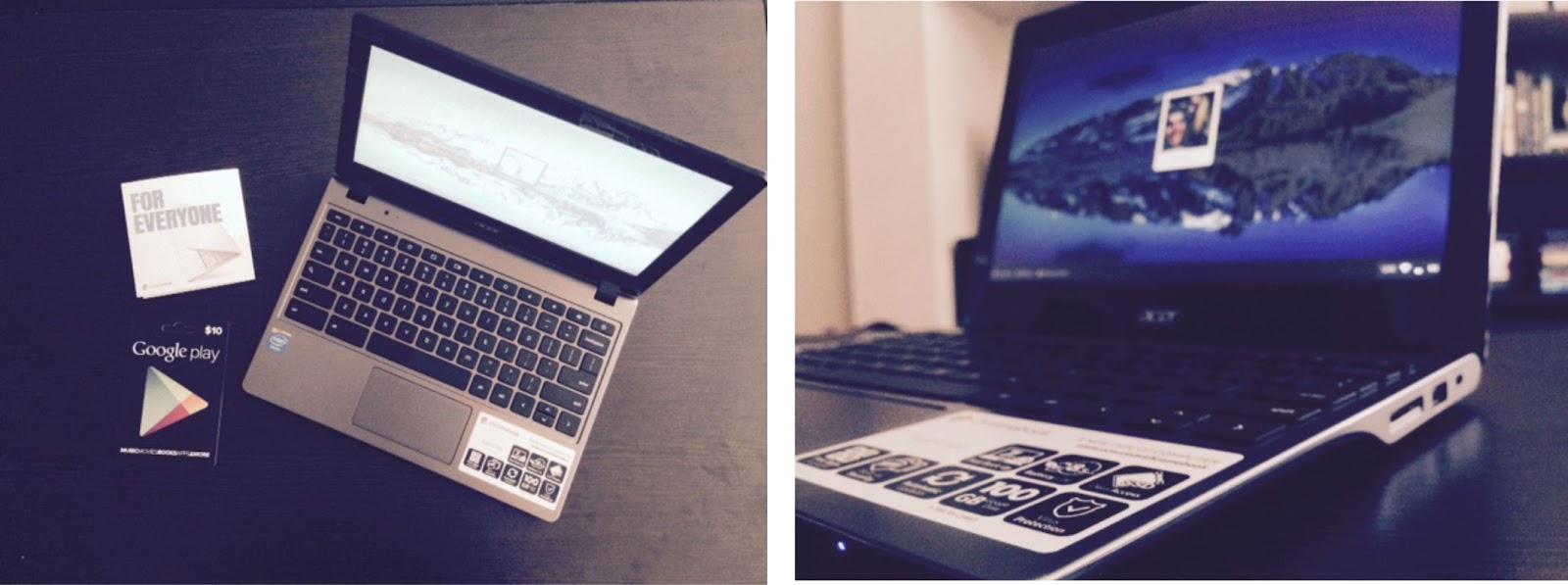
The Acer Chromebook C720 is light and compact, weighing just 2.76 lbs with an 11.6" screen
The Chromebook Lending Library, proudly touting the hashtag
#ChromebookForCollege, is a one stop shop for any student interested in
Chromebook 101. The cherry on top of this nifty kiosk is a sweet one: students
get full access to a Chromebook for up to three days for free. Top it off with
a promo t-shirt and a $10 Google Play gift card and Christmas comes early this
year for college kids across the U.S.
Everyone loves free stuff and cool vibes, but that isn’t the
only reason the Lending Library is such a great idea. The main reason this
tactic works is because it uses target marketing: bringing the product directly
to the consumer. Google knows the Chromebook is suited for students due to its
reasonable price, compactness and simplicity. Even more than that, Google knows
how to persuade its target market into buying its products without the market’s
awareness. < Playing popular music
and employing relatablestudent volunteers both contribute to the
unconscious attitude building that leads to buying behavior.
We see target marketing a lot in the digital world,
especially with cookies and digital advertisements. However, it takes much more skill to
plan and execute a marketing strategy in the physical world. With the Chromebook for College Lending Library, Google has
done just this (and in a flawless manner, I might add. But are you surprised?).
(Note: I am no way affiliated with Google, nor was I compensated at all for the creation of this post.)